The Honest Truth: Not Every Attic Needs a Complete Overhaul
When homeowners in Fayetteville start researching insulation upgrades, they often assume they need to tear out everything and start fresh. The reality is far less dramatic, and frankly, far less expensive. Many attics simply need a strategic top-up rather than a complete replacement. This is where understanding the difference between spray foam vs blown-in insulation becomes genuinely useful, because the right choice depends entirely on what you already have and what your energy bills are telling you.
The insulation industry isn't always transparent about this. Some contractors push complete removal and replacement because it's more profitable. But at Fayetteville Spray Foam Insulation, we believe in giving you the honest assessment first. If your existing insulation is still performing reasonably well and you just need to boost your R-value in certain zones, a targeted approach often makes more financial and practical sense than gutting your entire attic.
Spray Foam vs Blown-In Insulation: Understanding the Core Differences
Attic Spray Foam Insulation and blown-in insulation are fundamentally different products that solve different problems. Blown-in insulation, typically made from fiberglass, cellulose, or mineral wool, is loose material that gets pneumatically distributed across your attic floor. It's fast, relatively affordable, and works well as a simple coverage layer. Spray foam, by contrast, expands as it's applied and creates a continuous thermal and air barrier that adheres to surfaces.
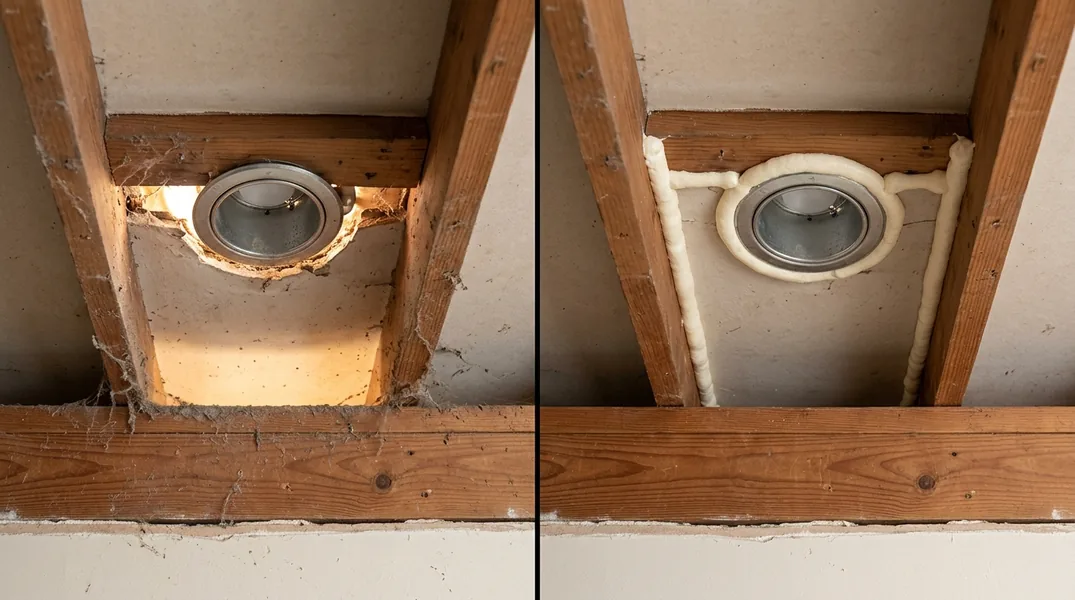
The performance gap between these two becomes clear when you consider air sealing. Blown-in insulation provides R-value (thermal resistance) but doesn't seal air leaks. Spray foam does both simultaneously. In Fayetteville's humid climate, where air infiltration and moisture management matter significantly, this distinction carries real weight. However, this doesn't automatically mean spray foam is the right choice for every situation. If your attic already has decent insulation and your main goal is bumping up the R-value, blown-in might be the practical answer.
Spray Foam vs Fiberglass: When Air Sealing Actually Matters
Fiberglass batts and blown-in fiberglass are the most common attic insulation materials in older homes throughout the region. They're affordable and reasonably effective at slowing heat transfer. However, they have a critical weakness: they do nothing to stop air leakage. A home can be fully insulated with fiberglass and still lose significant energy through gaps around penetrations, rim joists, and ductwork.
Closed Cell Spray Foam Insulation and Open Cell Spray Foam Insulation both address this by creating an air barrier as they cure. Closed cell is denser, provides a higher R-value per inch, and offers some moisture resistance. Open cell is lighter, more flexible, and typically more affordable while still delivering excellent air sealing. The choice between them depends on your specific attic conditions, ventilation setup, and budget. If you're dealing with a particularly drafty attic or you have moisture concerns, spray foam's air-sealing capability justifies the higher upfront cost. If your fiberglass is already doing its job and you just need more coverage, a blown-in top-up might be sufficient.
Best Insulation for Attic: It Depends on Your Starting Point
There's no universal answer to what constitutes the best insulation for attic spaces. The honest assessment requires looking at three things: what you have now, what your energy audit reveals, and what your budget allows. A home with R-19 fiberglass batts that was installed twenty years ago might benefit dramatically from a spray foam upgrade in critical zones like rim joists and around penetrations, while the main attic floor could receive a blown-in top-up to reach modern R-38 or R-49 standards.
Conversely, a home with relatively new blown-in cellulose that's settled slightly might only need localized spray foam injections rather than a complete removal. The key is getting a professional energy assessment that identifies where your home is actually losing energy. Many homeowners spend thousands on insulation upgrades in the wrong places because they didn't start with this diagnostic step. When you're ready to move forward, a free estimate from our team includes this kind of honest evaluation, not just a sales pitch for the most expensive option.
Spray Foam vs Cellulose: Durability, Settling, and Long-Term Performance
Cellulose is an environmentally friendly blown-in insulation made from recycled paper. It offers decent R-value and has some fire-retardant properties. However, it has a well-documented weakness: it settles over time. Within the first few years after installation, cellulose can lose 10 to 20 percent of its thickness as the material compacts, reducing your effective R-value. This is a physics problem, not a quality issue, and it means that blown-in cellulose requires periodic top-ups to maintain performance.
Spray foam doesn't settle. Once it cures, it maintains its R-value and air-sealing properties for decades. This makes it the lower-maintenance choice over the long term, though the initial pricing is higher. If you're planning to stay in your home for many years and want to minimize future maintenance, spray foam is the better investment. If you're looking for an immediate, budget-friendly boost and you're willing to accept that you might need touch-ups later, cellulose or fiberglass blown-in is a reasonable option. The decision ultimately comes down to your timeline and how much you value the convenience of a permanent solution.
When a Simple Top-Up Is the Right Call: The Practical Path Forward
Here's the scenario where we most often recommend a simple top-up rather than a complete overhaul. You've had an energy audit. Your existing insulation is intact and not contaminated. Your attic has adequate ventilation. Your energy bills are higher than they should be, but the problem is localized to specific areas or a general lack of depth rather than air leakage or moisture damage. In this case, adding blown-in insulation over your existing material is cost-effective, minimally disruptive, and solves the problem.
The top-up approach is also ideal if you're working with a limited budget but want to make a meaningful energy improvement now. You can start with strategic blown-in additions to your highest-priority zones, then plan a spray foam upgrade for air sealing later when finances allow. This staged approach is perfectly legitimate and often smarter than overextending yourself on a single large project. If you're in this position and want an honest assessment of whether your attic needs a complete transformation or just a strategic boost, call Fayetteville Spray Foam Insulation at (472) 263-8386 to discuss your specific situation with someone who isn't trying to upsell you.
Looking for a professional spray foam insulation contractor in Fayetteville? Fayetteville Spray Foam Insulation responds fast for all your spray foam insulation needs.
Get a Free Quote