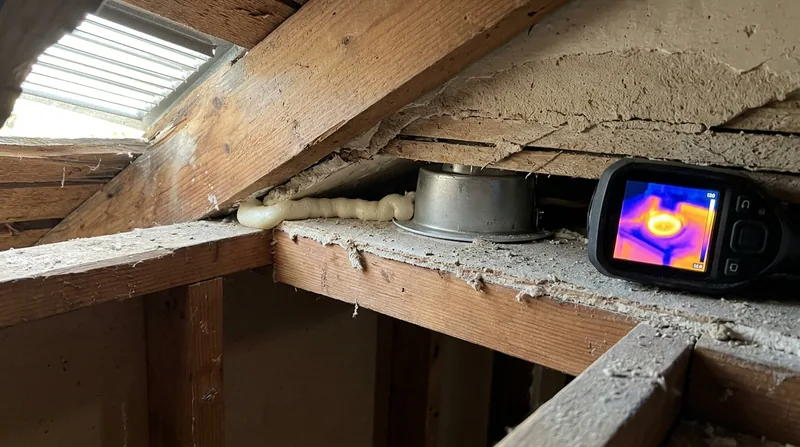




Fayetteville sits where the Piedmont meets the coastal plain, and most homes here rest on vented crawl spaces raised on brick piers over sandy soil or on slabs with no basements. Above them, air handlers and ductwork sit in vented attics that bake at 130 to 150 degrees Fahrenheit through long humid summers. The problem is simple: air sealing in Fayetteville stops the cooled air from leaking out through top plates, can lights, chases, knee walls and attic hatches before it even reaches the living space. Without air sealing, insulation alone cannot perform. We seal the leaks first, the step that makes every R-value actually work and delivers the cheapest comfort fix in a Fayetteville house.
From the 1910s bungalows of Haymount to the 1950s brick ranches of Bonnie Doone and Vanstory Hills, from the mill villages of Massey Hill to the two-story FROGs (finished rooms over garages) that Fort Bragg military families rent in Hope Mills and Spring Lake, air leakage is the common thread. Spray foam fills and seals at once. When we combine air sealing with insulation, the result is real comfort, not just higher R-values on paper. Read more about our attic spray foam insulation service to see how sealing and insulation work together.
Why Air Sealing Matters in Fayetteville's Climate
Fayetteville's humid subtropical climate drives moisture into crawl spaces and attics year-round. The long muggy summers mean your air conditioning runs constantly, and every unsealed penetration, gap and chase lets that cooled air escape before it cools your bedroom. Hurricanes Matthew in 2016 and Florence in 2018 flooded the Cape Fear valley, and humidity is the default condition here. Air sealing stops the leak; insulation keeps the temperature where you set it.
- We locate and seal top plates where the attic floor meets the exterior walls, the single biggest leak path in most Fayetteville homes.
- We seal around can lights, exhaust chases and ductwork penetrations that builders leave open and that pull conditioned air straight into the unconditioned attic.
- We seal knee walls and attic hatches so the finished room over the garage actually cools down instead of staying 10 degrees hotter than the rest of the house.
- We seal rim joists and band joists in crawl spaces to stop the humid outdoor air from entering the foundation and raising crawl space moisture year-round.
The result is that your air conditioning system works with the insulation, not against it, and your utility bills reflect the actual R-value you paid for.
Key info: A Fayetteville home with R-19 blown-in attic insulation but open penetrations loses 40 to 50 percent of its cooling to air leaks. The same home with the same R-19 plus air sealing at the top plate, can lights and chases keeps that cooled air inside. Air sealing is not optional; it is the foundation of insulation performance.
For more detail on how sealed attics compare to vented ones and what the code requires at your address, consult the North Carolina Building Code Enforcement office.
How We Seal Air Leaks in Fayetteville Homes
Air sealing starts with a walk-through of your attic, crawl space or rim joist area. We identify every leak: gaps where the top plate meets the exterior wall, unsealed can light fixtures, open ductwork chases, wire and plumbing penetrations, and gaps around exhaust vents. We use spray foam, caulk and mechanical sealing to close them. The goal is to create a continuous air barrier so conditioned air stays where you need it.
- We inspect the attic, crawl space or rim joist and mark every air leak with a visual flag or note.
- We seal gaps at the top plate where the attic floor meets the exterior wall using closed-cell spray foam or foam sealant, depending on the gap size.
- We seal around can lights with foam rings or closed-cell foam, the only method that stops air leakage at recessed fixtures.
- We seal ductwork chases, plumbing and electrical penetrations with spray foam or caulk, depending on the substrate and access.
- We seal rim joists and band joists in crawl spaces with closed-cell foam to stop humid outdoor air from entering the foundation.
- We apply a mechanical barrier or thermal barrier if required by code at your address, and we defer to the local building official on whether your attic ventilation must remain open or can be sealed.
The entire process respects your home's existing structure and any pest control inspection strips required by a termite bond. If we find vermiculite insulation, which may contain asbestos, we stop work in that area and leave it undisturbed.
Example: A 1960s brick ranch in Bonnie Doone with a vented attic and original fiberglass had 15 major air leaks at the top plate, 8 open can lights, and 3 unsealed ductwork chases. We sealed all 26 penetrations with closed-cell spray foam and caulk over two days. The homeowner reported that the upstairs bedroom, which had always been 5 to 7 degrees hotter than the downstairs, cooled to within 2 degrees after air sealing. No insulation was added; sealing alone made the existing R-19 fiberglass work.
Learn more about our closed-cell spray foam insulation service, which is the product we use for most air sealing work.
Air Sealing Methods and Materials
| Approach | Description | Best for |
|---|---|---|
| Closed-Cell Spray Foam | Two-part polyurethane sprayed at 2 pounds per cubic foot; cures rigid and air-tight in 24 hours; rated R-6 per inch; stops air and vapor in one pass. | Top plates, rim joists, band joists, ductwork chases, attic penetrations in humid climates where moisture control is critical. |
| Caulk and Sealant | Polyurethane or silicone caulk applied by gun into small gaps and cracks; does not expand; rated for gaps up to 1/2 inch wide. | Small penetrations, wire holes, gaps around electrical outlets and plumbing in attics where foam would be overkill. |
| Foam Sealant (Low-Pressure) | Single-component polyurethane foam in a can; expands moderately; rated for gaps 1/2 inch to 3 inches wide; cures in 8 to 12 hours. | Medium gaps at top plates, around can light fixtures, and attic floor penetrations where two-part spray foam is too aggressive. |
| Mechanical Sealing (Gaskets and Tape) | Adhesive-backed foam tape, rubber gaskets and foam weatherstrip applied to gaps; no cure time; rated for gaps up to 1/4 inch. | Attic hatches, access doors, and edges of rim joist blocking where a removable seal is preferred. |
We choose the method based on the gap size, the substrate (wood, metal, concrete), access, and local code requirements at your address. Closed-cell spray foam is the most effective for large penetrations and humid environments; caulk and mechanical seals are faster for small gaps and cost less. We do not use expanding foam in occupied spaces without mechanical ventilation during cure, and we always follow the manufacturer's ratio and drum temperature to ensure the foam cures correctly.
Air Sealing Cost in Fayetteville: What to Expect
Air sealing costs depend on the scope of work: the number of leaks, their size, the substrate, and whether you are sealing an attic, crawl space or rim joist. A small attic with 10 to 15 open can lights and a few top plate gaps might start at $650 to $900. A larger home with multiple penetrations, a finished room over the garage, and rim joist sealing could run $1,500 to $3,000 or more. A crawl space with significant moisture and many rim joist gaps often costs more because the work is slower and access is tighter.
The main factors that move the cost up are the number of penetrations, the height and accessibility of the attic, whether the rim joist is blocked with existing insulation that must be removed first, and whether the substrate is clean and dry. A Fayetteville ranch with a straightforward attic and no rim joist work will cost less than a two-story with a FROG and a damp crawl space. We always provide a written estimate with the scope, the materials, and the R-value or thickness of any insulation that follows the sealing.
Visit our pricing page for a detailed breakdown of typical jobs and the factors that affect the final cost.
Air Sealing Near Me: What Fayetteville Homeowners Should Know When Hiring
When you call a spray foam contractor for air sealing, verify that they are fully insured and that their insurance certificate covers the work at your address. Ask for a written estimate that names the specific leaks they plan to seal, the material they will use, and the expected outcome. Do not accept a price estimate with no detail; a good contractor will walk your attic, mark the leaks and explain why each one matters. Ask for references from recent Fayetteville jobs, and call at least two to confirm the work was done on time and the seal held.
If your home is in a master-planned community like Vanstory Hills or a historic district in downtown Fayetteville, check your HOA rules or the local historic preservation office to see whether exterior work on your home requires approval. Air sealing inside the attic or crawl space is rarely restricted, but it is good to know before you start. Inspection strips along the foundation stay clear: we work around them.
North Carolina does not require a special license for spray foam installation, but the building code at your address may require a permit for attic work or sealed attic conversions. We help you understand what applies at your address and can work with your local building official, but permitting and code compliance are your responsibility. Call us at (472) 263-8386 for a free estimate, or contact us online to describe your home and the rooms that are too hot or too cold.
Air Sealing in Fayetteville: Pricing Guide
| Service | Price | Details |
|---|---|---|
| Small attic air sealing | Starting at $650 | 10 to 15 open can lights and minor top plate gaps; includes foam rings and caulk; typically one day |
| Medium attic and rim joist sealing | Starting at $1,200 | 20 to 30 penetrations plus rim joist work; includes closed-cell foam and caulk; two to three days depending on crawl space access |
| Crawl space and foundation air sealing | Starting at $1,500 | Rim joist, band joist and foundation rim sealing with closed-cell foam; moisture control and termite bond compliance; three to five days |
| Whole-home air sealing package | On estimate | Attic, crawl space and rim joist sealing combined; requires on-site inspection to scope all penetrations and moisture conditions |
| Travel and estimate | Free | No charge for estimates in Fayetteville and surrounding service areas; response within 24 hours at (472) 263-8386 |
Indicative pricing, the exact cost depends on square footage, finish, and site access. Free personalized estimate within 24h at (472) 263-8386.


